
The rapid advancement of technology and artificial intelligence has deeply reshaped the way we live, work, and connect with others. Tasks are increasingly automated, processes move faster, and digital connectivity keeps expanding. As a result, human distancing has become more noticeable, with many people experiencing loneliness, ongoing stress, and difficulty truly switching off.
In this context, the body is often one of the first to reflect this imbalance. Muscle tension, anxiety, and emotional fatigue have become increasingly common. This is where massage takes on a new role. More than just relaxation, it becomes a human response to an overly automated world.
Technology, automation, and the limits of mechanical touch
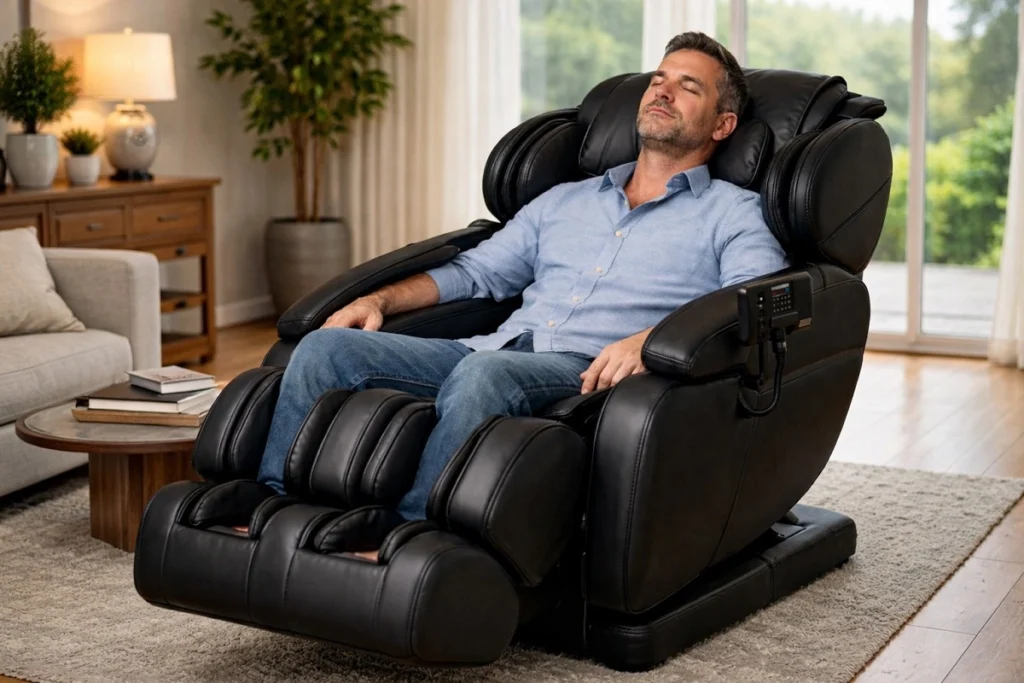
Today, highly advanced massage chairs are already available, equipped with sensors, multiple programs, and personalized adjustments. They provide comfort and convenience, and can be helpful for relieving occasional tension from daily routines.
Even so, this progress highlights a fundamental limitation: mechanical touch cannot replace human touch. Machines can replicate movements with precision, but they do not perceive emotions, adjust with sensitivity, or create genuine connection. Massage involves empathy, awareness, and the ability to read both the body and the emotional state of the person receiving it. And beyond that, there are currently over 100 different massage techniques — but will it ever be possible to recreate one that truly simulates the subtle and stimulating touch of tantric massage?
Human touch and its effects on body and mind
Human touch has well-established physiological effects recognized by science. It helps lower cortisol levels, activates the parasympathetic nervous system, and stimulates the release of oxytocin, which is linked to feelings of safety and trust. These effects are not driven by movement alone, but by the presence, attention, and intention behind the touch.
Massage works on both the body and the emotional system, promoting deep relaxation. It is an experience based on perception, listening, and connection, going far beyond technique.
What if robots become almost human in the future?
It is possible to imagine a distant future where robots become more human-like, with synthetic skin, advanced sensors, and even simulated emotional responses. Even if that becomes reality, it is something that will likely take decades to fully develop.
Still, an important question remains: can a machine, no matter how advanced, truly replace the subjective experience of human interaction?
Touch is much more than a physical stimulus. Knowing that a professional human massage therapist is attentive and present is part of the experience. This relational dimension goes beyond technology.
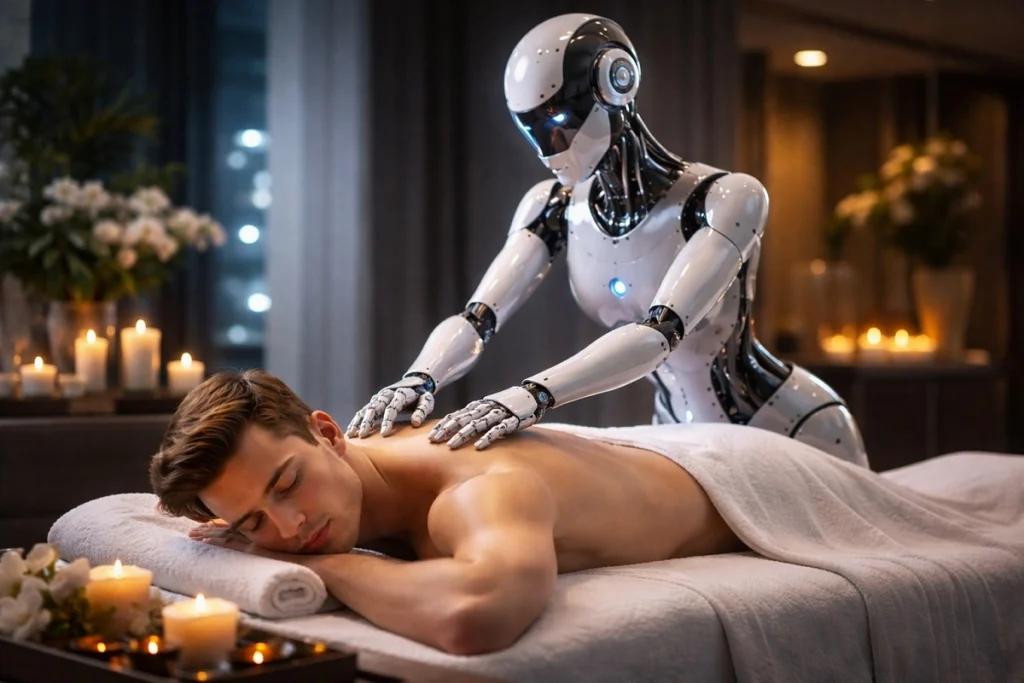
The importance of massage over the next 10, 20, and 30 years
Over the next 10 years, the demand for well-being practices is expected to grow, driven by increasing mental overload and the fast pace of digital life. Massage will increasingly be seen as a form of preventive care.
In 20 years, as automation becomes even more widespread, human touch will stand out as a valuable differentiator. Experiences involving real presence gain importance in a world that moves faster and feels increasingly impersonal.
30 years from now, in a highly technological society, human contact is likely to become one of the most valuable resources. The more digital life becomes, the greater the need for real, physical experiences.
Conclusion: technology evolves, but the human element remains essential
Even as technology continues to evolve, therapeutic touch remains one of the deepest forms of human connection. As demand grows for real, human-centered experiences in an increasingly automated world, massage is likely to become even more valued — including reflecting in higher prices over time.
Reconnect with what truly matters
If the pace of digital life has been weighing on your body and mind, it may be time to reconnect. Massage is an invitation to slow down and take care of yourself.
